How to Track the Execution of Bus Branding and Advertising Campaigns Effectively
Learn how to track bus branding campaigns effectively with installation verification, route monitoring, regular checks, and real-time reporting to ensure outdoor advertising execution.
Bus branding and advertising are powerful forms of outdoor advertising in busy cities. Every day, buses travel through crowded streets, markets, business districts, and residential areas, exposing thousands of commuters and pedestrians to moving advertisements.
For brands, this creates a great opportunity to reach a large audience. But launching a bus branding campaign is only the first step. The real challenge is knowing whether the campaign is actually running the way it was planned.
Are the ads installed correctly? Are the buses running on the right routes? Are the advertisements still visible during the entire campaign? Without proper outdoor advertising tracking, brands may never know if their bus advertising campaign is being executed correctly.
Understanding Bus Branding and Advertising
Before talking about tracking, it’s important to understand what bus branding and advertising actually means.
Bus branding is a form of transit advertising where companies place their advertisements on buses. These ads can appear in different formats such as:
Full bus wraps - where the entire bus is covered with brand visuals
Side panel ads - advertisements placed on the sides of the bus
Back panel ads - ads displayed at the rear of the bus
Interior ads - advertisements placed inside the bus for passengers
Because buses move across different areas throughout the day, they act like moving billboards. This makes bus advertising one of the most effective ways to increase brand visibility in large cities.
But since buses are constantly moving, tracking whether the campaign is running correctly becomes very important.
Why Tracking Execution Matters
Many brands spend a large budget on bus branding campaigns, expecting their advertisements to reach thousands of people daily.
However, without proper monitoring, several problems can occur:
Ads may not be installed on the correct buses
Branding may get damaged or removed during the campaign
Some buses may not run on the planned routes
Campaign updates may not reach the marketing team on time
When these issues happen, brands may end up paying for advertising that is not actually delivering results.
This is why bus advertising campaign tracking is important. It helps brands confirm that their transit advertising campaign is running exactly as planned.
Key Ways to Track Bus Branding Campaign Execution
Tracking a bus advertising campaign doesn’t have to be complicated. With the right approach and tools, brands can easily verify whether their campaigns are active and visible.
Here are some of the most effective methods used in the industry.
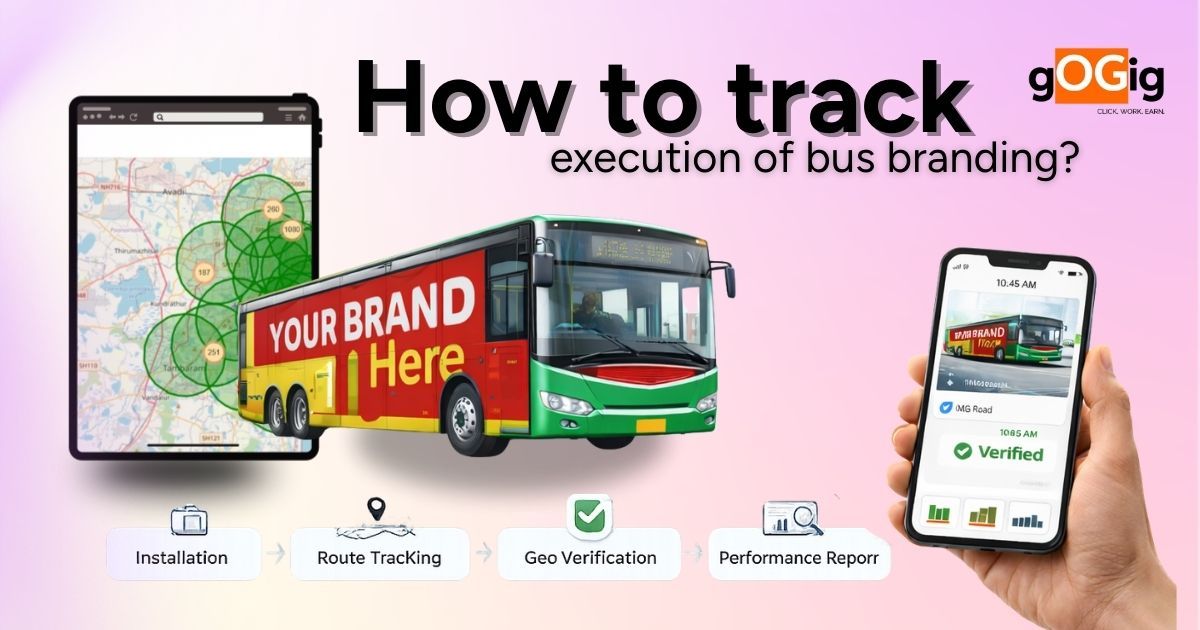
1. Installation Verification
The first step in any bus branding campaign is installing the advertisement on the buses.
During this stage, teams collect photo proof of the installed advertisements. These photos help confirm that:
The advertisement is placed on the correct buses
The design matches the approved artwork
The branding is clearly visible
Installation verification is important because it ensures that the campaign has started properly.
2. Route Monitoring
Buses usually run on specific routes across the city. When brands plan a bus advertising campaign, they often select buses that travel through high‑traffic areas.
Tracking these routes helps ensure that the buses are operating in locations where the advertisement can get maximum visibility.
For example, buses traveling through:
business districts
shopping streets
railway stations
residential neighborhoods
are likely to generate more exposure for the brand.
Monitoring these routes helps brands confirm that their bus advertising campaign is reaching the right audience.
3. Regular Campaign Checks
Another important part of outdoor advertising tracking is conducting regular checks during the campaign.
Since buses operate every day, advertisements may get damaged due to weather conditions, road dust or regular wear and tear.
Regular inspections help ensure that:
The advertisement is still visible
The branding is not damaged or faded
The campaign is still active on all planned buses
These checks help maintain the quality and visibility of the campaign.
This helps marketing teams manage large bus branding campaigns more efficiently.
Wrapping It Up
Managing a bus advertising campaign across multiple routes can be challenging without the right tools. gOGig simplifies this process by helping brands track and verify bus branding campaigns with complete transparency.
With gOGig, brands can verify bus branding installations, monitor campaigns across different routes, receive real‑time updates from field teams, and manage reports from a single platform. This makes outdoor advertising tracking easier and more reliable.
Instead of guessing whether ads are actually running, brands can clearly see how their bus advertising campaign is being executed.